
Every day, my social media pages are flooded with people looking to rehome their dog, or notifying others that they’ve taken the euthanasia route. Occasionally it’s due to unavoidable and unpredictable life changes, and I have nothing but sympathy for them. But more often than not, it’s something I have less sympathy for: they brought the wrong breed home with them in the first place.
In the last week alone, I’ve witnessed the following terrible choices:
- a game-bred Pitbull going to a home where the owner works most of the day and needed to depend on a Doggy Daycare service;
- a Border Collie going to a 60-square-metre flat in Birmingham on the twelfth storey;
- a Bulldog with BOAS going to live with a property surveyor who brings his dogs to work;
and - a Jack Russell Terrier going into a home that has five cats and a house rabbit already.
All of these dogs are thoroughly incompatible with the homes they’re going to – meaning that they’re either going back to the breeder in a few months to a year, or a hell of a lot of work is going to need to go into them… changing their new owners’ lives – and often not for the better.
But it’s not always out of cluelessness. Often, people take on energetic working dogs because they are energetic people themselves, who like what the breed can do.
Case in point:
Last month, I saw an adolescent Belgian Malinois on a train, muzzled, harnessed, on a prong collar and an E-Collar, handled by two children under twelve, while their father looked on, his hands covered in deep wounds poking out of bandages. The Mali was claiming an adjacent train seat instead of standing in the aisle, and growling at the children when they tried to move him off; at one point he attempted to bite the smaller child’s face – only snout-punching him due to the muzzle. Several minutes later, the father, with no prompting, took the dog by its prong collar and jerked him up off the ground, causing the dog to yelp and then cower for the remainder of the trip. Now, this example might just sound like horrific dog ownership and irresponsible parenting – which it was – but what was much more striking was the breed selection failure that sat behind it all, like the elephant in the room.
This family had picked a powerful and athletic dog whose strength and energy they weren’t directing. They were also attempting to suppress its desire to bite with aversives – which is about as effective with a Malinois as trying to teach a fish to air-breathe by fitting it with a lifejacket. The Mali was selectively bred to bite, and this will always be part of its nature. The best way to live with a Mali is to give it opportunities to bite in a controlled setting, to satisfy that biological urge – and no, giving it some chew toys and playing ten minutes of tuggy isn’t going to do it. Unless you’re able to run your Mali for hours to drain its energy, train it to remarkable levels of skill to occupy its brain, and give it ring work to do to satiate its innate desire to chase and bite, then just don’t get one. This family hadn’t taken this advice, and were facing the consequences – as was the poor dog.
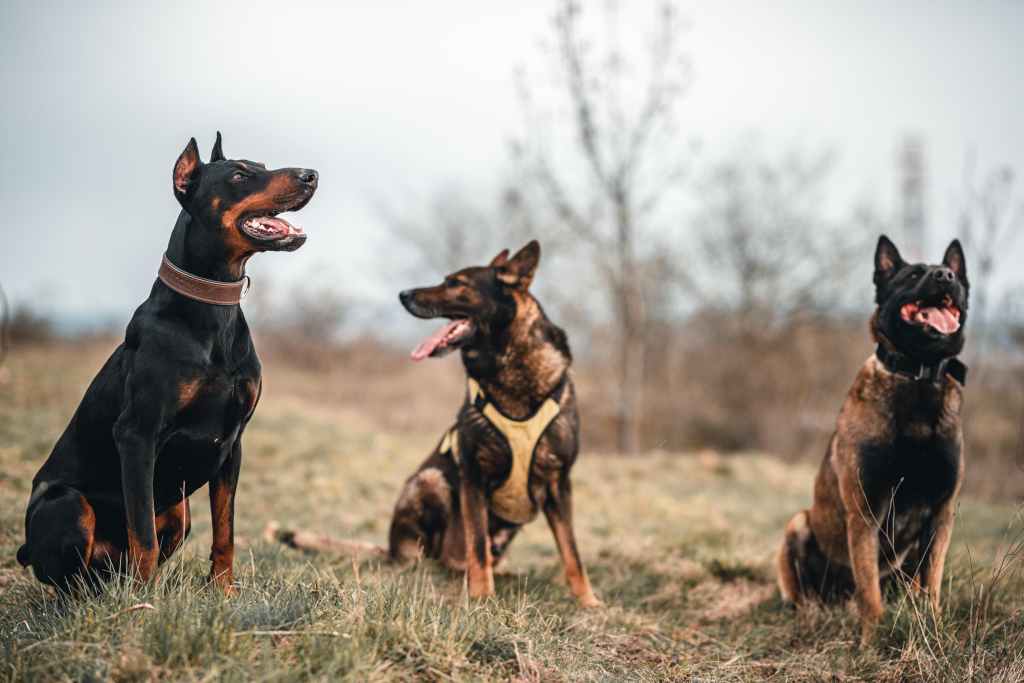
The Belgian Malinois isn’t a special case.
All breeds come with their innate wiring and it CANNOT be undone (even if some breeders are determined to dampen working dogs’ drives to make them “pet suitable” or “show dogs”).
How about a brief history lesson about how these traits are so ingrained?
HISTORY: How the Dog Breeds Came to Be
Tens of thousands of years ago, wolf-like ancestors of modern dogs lived on the outskirts of human settlements, scavenging off our scraps. The hunting types stayed well away, and so did those that were too wary of humans – meaning that the ones that got close were already genetically pre-selected for low levels of predation and high levels of human tolerance (when compared with other wolves). When the dog made the transition into human companion and collaborator, it was only the ULTRA-low-predation and ultra-high-human-sociability specimens that joined our ranks – they survived because we fed them, and we fed them because they were safe and sociable. In the thousands of years that followed, it was only the dogs who behaved a certain way that we kept by our sides, to mate with the others already at our sides; they survived because we fed them, and we fed them because they were useful. This was the process dogs went through – first self-domesticating and then becoming domesticated through selective breeding. Safe, sociable, and useful.
Now, as populations of dogs grew, diversity was required. In different geographical regions, and tasked with different purposes, dogs developed specific phenotypes, both morphologically and temperamentally – meaning that specific “landraces” emerged, who were suited to the climate, terrain, and occupation they existed in, alongside their human collaborators. Then, as their work became more refined and we demanded more precision and greater output from them, we began to do deliberately what we had been doing by chance up until this point: artificial selection. We ensured that only the best dogs for the jobs got to mate with each other, and only the best puppies from those litters got to survive. By selectively breeding for purpose, we created the early “breeds” of dogs on earth. BUT, we’re talking about ancestors to the modern breeds – we’re still several thousand years back from the present day, here.
It was in the 19th Century that things really started to take shape. The Victorians – particularly the English – became obsessed with dogs and turned dog shows into a legitimate pursuit… not to mention turning “breeding” into a high-class hobby. Because much of the emphasis was on “conformation”, the morphology, or looks, of the dog were the number one priority – and as such, lots of inbreeding and linebreeding led us to consistent “breed standards” in terms of size, shape, colour, and all that jazz. Now, THIS is where most people think breeds come from, and they’re right, to an extent – the modern notion of a “breed” did come into effect here, once we started breeding for looks – but what we often neglect to realise is that each dog that becomes standardised into a certain conformation by breed and kennel clubs has decades, if not centuries, if not millennia, of selective breeding behind them that had to do with WORKING purpose. So, when you go to a dog show and find the most handsome dog, or stop a stranger with a gorgeous puppy what breed it is, don’t forget that it still carries generations of working potential beneath its fluffy exterior – potential that often flies in the face of what we want from our pet dogs.
Of course, many breeds – particularly in the Toy category – WERE bred from the very beginning to be companions and lap dogs. That’s the reason that you almost never find these dogs in rescue for behavioural “issues”. Malteses were bred to be companions; Malinoises were not.
And, on the topic of “behavioural issues”, let’s be really clear: that is a modern concept. Because we insist on putting working breeds into our homes, we confuse their selectively bred traits for flaws in their character. “My Shepherd is too barky”; “My Corso is too protective”; “My Vizsla is too energetic”; “My Greyhound is too predatory”. If we selected dogs based on their genetic tendencies instead of their looks, reputation, or personal history, none of these ridiculous statements would have to echo in our ears. There would be two major changes, I think: rescuers and trainers and behaviourists would be out of a job (boo), but dogs wouldn’t be given up or prematurely euthanised (yay). On balance, it’s a win – and that’s my greatest passion as “that breed guy”: to ensure more thoughtful, educated breed selection. Then, rather than complaining that our dog is aggressive, we could opt for a dog not bred for aggression! Seriously, it’s not an insult to call a dog “aggressive” – in fact, to many working dogs, it would be more of an insult to say they weren’t aggressive, given that their entire purpose depends on it.

So, how DO we select a breed to avoid a miserable experience of incompatibility for dog and owner?
Selecting the Right Breed: the PETS Method
Okay, so I have come up with a neat acronym for this: PETS. P for Purpose; E for Energy; T for Time demands; and S for Size. Specifically, I’ll be thinking about pet dogs, here (hence PETS), rather than dogs for working roles – because there’s rarely a problem there!
I would work through each aspect in order.
P: Purpose
A dog’s original breeding purpose is crucial to bear in mind when bringing one home, as I’ve briefly just discussed. Now, it may be no big deal – a St Bernard’s early purpose was mountain rescue, but that doesn’t result in any leaking drives that would bother most people, and the majority of modern St Bernards have been bred so large and slow that they can’t do much mountaineering anyway. Alternatively, it may be a very big deal indeed – when you take home a Yorkie because it’s small and cute and then find that its terrier purpose has it obsessing over mice in the walls and trying to kill the neighbour’s chinchilla.
So, as a general rule of thumb, think about the following categories of working purpose: Sighthound, Scenthound, Gundog, Herder, Guardian, Terrier, Bulldog and Toy. In a nutshell, here’s an overview soundbite on each to get you started. Sighthounds need to run, and love to chase, but work well in family homes. Scenthounds follow their noses more than their owners, and love to make noise, but work well in most homes. Gundogs love to run and retrieve, and have lots of stamina, but some fit in well into both working and family homes – with some modifications. Herders need to work, often make a lot of noise, and demand to be constantly occupied – only slotting in easily in working households or sporting environments, rarely traditional family homes. Guardians need to look after something, but are generally manageable in most homes, with safety modifications and awareness of territories. Terriers love to chase and kill, tend to make a ton of noise, and despite their often diminutive size are only suitable with lots of management in a family home. Bulldogs are stubborn and confrontational, but typically very manageable in most scenarios – due in part to modern breeding practices. Finally, Toy dogs need to be near you and are very easily managed by the majority of owners.
Think about what kind of purpose meshes best with your lifestyle and the kind of enrichment you can and want to give to your dog. Don’t confine a herder. Don’t isolate a Toy. Don’t be a numpty – you get the point.
E: Energy
Obviously there’s some crossover, here. Breed purpose ties in with energy demands. But I need to make a massive point about energy and breed selection: don’t pick the most energetic dog because you’re the most energetic person you know. Dogs have always outrun and outworked us; that’s one of the reasons we needed them, early on in history. Don’t convince yourself that you need a German Shorthaired Pointer or an Aussie because you’re a jogger. Even a dog in the middle of the energy spectrum, like a Schnauzer, is going to be more than most humans can keep up with. So, if you’re an energetic person, pick a medium-energy dog (like most of the Scenthounds and some of the Gundogs), and save the high-energy dogs (like the Herders and lots of the Terriers) for people who are going to work them: in a vocation or a canine sport, like Flyball or Agility.
As a brief rule of thumb, here are some really pet-suitable breeds of various energy levels, that you can compare with your lifestyle. At the lowest end of the energy spectrum, we have the vegetables – the lumps of snoring cuteness that barely resemble dogs in many ways, who sleep more than half the time. These include, in size order, most of the Toy breeds, the Bulldog (English, obviously), the Basset Hound, the Chow Chow, the St Bernard, and the Mastiff (again, English, obviously). In the middle category, with dogs who love to sleep but also love to spend time “being a dog”, you’ve got most showline versions of the retrievers from Gundog group, like the Labrador, the Goldie, and the Cocker Spaniel, as well as the Scenthounds like the Beagle and the Bloodhound. I’d also include most sighthounds in this category, too, because they are binary beasts: on or off; 40-miles-an-hour or asleep – meaning that, with adequate sprinting outlet, they become highly sedentary in the home. At the ultra-high energy end of the spectrum, it’s the super-athletes, masters of speed, stamina and agility, the dogs who are always “on”, and you’re looking at the working line retriever-type Gundogs mentioned a minute ago, and their hunting friends like the pointing-type Gundogs – as well as the whole category of herding breeds.
So where do you fit in?
Well, if you can’t always guarantee a walk and some play, every day, opt for the low-energy breeds. If you can commit to a walk and some playtime, every day, then go as high as medium-energy. And if you intend to make your whole life about your dogs, consider the high-energy category – at your peril! The reason I hammer this point home is not because I don’t like high energy dogs. On the contrary, it’s because I adore them that I don’t recommend them to unsuitable homes – and because a surplus of energy is either the direct reason or the hidden reason behind most shelter relinquishments I see (incidentally, “aggression” is the biggest reason for behaviour-related EUTHANASIA cases I see, hence STARTING my considerations with P for breed Purpose).
T: Time Commitments
So, again, we do appear to be getting some crossover again. That’s deliberate. Dogs with purposes that create a lot of energy also take up more time in expelling that energy – that’s a given. But the point of mentioning time specifically is when you consider the needs that go beyond exercise and work-based fulfilment – time demands like social interaction and company. And those ARE different things, by the way. Lots of breeds need you about to “do stuff” with you – I’m always reminded of my friend’s Spaniel cross, who used to bring a ball to be thrown all day with his owner who was working from home. But there are other dogs who just like you to be around, but won’t ask much of you – especially most natural guardian types. I’m a mastiff-lover and all of my dogs have contented themselves by snoozing in the corner while I work or go about my business at home, but who also follow me from room-to-room to do so.
The time you’re able to give to your dog, whether it’s to meet its physical and mental, or even emotional needs, is a huge consideration. If you work a 9-to-5, with a long commute, and nobody’s at home during the day, get yourself a highly independent breed (like a livestock guardian, if you have livestock to guard) or, more realistically, consider a cat. Seriously. A dog is too much for you. If you work a 9-to-5, but your commute is shorter, and you have someone who’s around for some of the day, or who can take your dog out – or if you can do that, even better – then you’re opening yourself up to more options, particularly the lower-energy, lower-drive breeds who will notice your absence less due to being asleep. If you work from home, or your partner does, or if you are part-time, or have a neighbour who spends some time with your dog, then again you’re moving through the ranks of dog neediness. Retirees, for example, do very well with Toy breeds, who are very needy, because they can be around for most of the day. Individual dogs will have varying social needs, but as a general rule of thumb: if they were bred to collaborate with people, they will be less easy to train to be alone.
S: Size
Now, size is mostly something of an aesthetic choice, and that is irrelevant to me. The only two aspects of size that matter, in practice, are manageability and durability.
Manageability refers to your own physical strength and how your home is set up, in relation to the size of your desired dog. Can you realistically lift a giant breed dog into your car when it gets tired, or old, or injured? Can you control an extremely muscular and powerful dog when it is desperate to get to something you don’t want it to get to? Will a dog with a baseball bat for a tail be able to avoid knocking things over in your small home? These are all important questions to ask about larger dogs. Equally, though if you have bad knees, are you going to be able to squat to the floor to pick up your miniature-sized dog? Do you have a home with no small gaps the tiny thing can escape through?
Then, we consider durability. With larger dogs, they can withstand the elements if they have the coat for it, and are not easily knocked about or injured. That said, they often suffer with joint issues, particularly at the heavier end, and their vet bills can be astronomical. Before my Corso died last year, I was the proud owner of over 120 kilos of dog, between my two, and paying vet bills was no joke, let me tell you! Miniature breeds, on the other hand, tend to be generally healthier and incur less expense, but they are also more fragile – meaning the type of home and lifestyle we have needs to be considered. The number of Italian Greyhounds whose legs have been broken in casual play with children is unbelievable!
And, on the subject of children, it’s also worth knowing which breeds are excellent with children, and which are a big no-no, if that’s relevant to you. I don’t include it in the PETS acronym because it’s not something everyone needs to consider. Some other things that may or may not be of relevance when selecting a breed include coat (will it shed a lot, are you allergic, is it easy to maintain), level of vocals (do you like chatty dogs, will the neighbours be bothered, does it have a tendency to bark at night – I’m looking at you, livestock guardians!), and also the general health of the dog (including longevity, inherited diseases, and freedom from pain).
There are, of course, a hundred other things you could consider along this journey, like your breed’s tolerance to cold, or its suitability as a therapy animal, or any other number of things – but if you’ve got this far, you’re already going to be better off than most of the population of dog owners.
Good luck!
 That Breed Guy