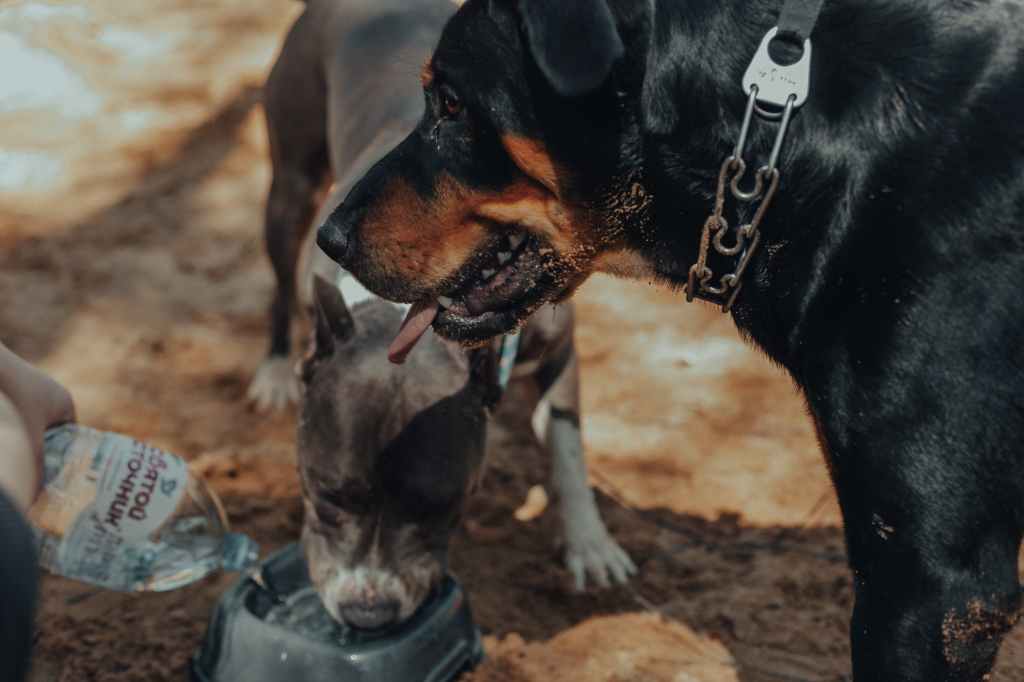
My life was changed by a guardian breed. It’s no coincidence that I always end up referring to guarding dogs in my examples as “that breed guy”; they are my absolute favourite type of dog, hands down. Their loyalty, passion, and utter dedication to you is like nothing else. In fact, as much as I love other people’s ultra-sociable dogs gambolling over to me (a perfect stranger), for cuddles in the park, I couldn’t handle that as an owner. My ego simply couldn’t tolerate a dog whose love extends to anyone it sees; stranger-wary dogs are way more suitable to this introvert and ego. As selfish as it sounds, my dogs need to be all about me… to be fair, though, it’s mutual.
In the last decade or so, I’ve shared my home with a Cane Corso (Bonnie, the girl who started it all), a Boerboel, a Mastiff (AKA English, or Old English Mastiff), a Pyrenean Mountain Dog (AKA Great Pyrenees), and a Spanish Mastiff (AKA Mastín Español). I have also witnessed, in these years, a concerning increase in the numbers of guardians taken on injudiciously by short-sighted owners and subsequently euthanised or put up for adoption – with particularly concerning numbers of Cane Corsi, Caucasian Shepherds and Belgian Malinoises falling foul of this trend. As always, individual case studies throw up interesting titbits of context, but the one universal factor was (you guessed it) awful breed selection – these people should never have taken on dogs like these in the first place.
So, this article is my own very small way of combating that picture; I’m going to take you through what you need to know to bring the right guardian into your life. As always, my bias will be more towards the “normalised” audience: pet owners in family homes.
So, let’s establish a few important language choices.
Defining Terms:
I’m going to be distinguishing between watch dogs and guard dogs, today – wherein watch dogs are highly vigilant and will alert you to intruders, but who will not act, unlike guard dogs who will both alert and protect if necessary. I also distinguish between three types of guard dogs: utility protectors, who will defend on command, as required, from attackers; family, home, or “homestead” defenders, who will protect you and your home or land from intruders, naturally; and finally livestock guardians, who will roam your estate, seeing off predators and living among the flock or herd to keep them safe. Within these categories and subcategories, I will also be referring to “intensity”, by which I mean things like: quickness to react to a threat; likelihood of biting; and ease of bringing back to calmness. Realistically, if you are able to match each of these purpose-bred categories to your lifestyle and needs, you’ll be happy.
But, that’s not the approach commonly taken…
The Current Picture: How NOT to Choose a Guardian
I am forever frustrated by the misuse of large and powerful dogs. The dogs find themselves in the hands of morons looking for intimidation factor to the max, on the mean streets, and the breeds get co-opted by so-called “breeders” who select for size and aggression rather than structural soundness and temperamental stability, to meet those morons’ requirements. This means that even some of the most suitable breeds on paper have become a risk in practice. There’s poison in the bloodlines. So, let this be your warning: once you’ve chosen a breed, you also need to be really damn careful with your kennel and puppy selection – but that’s a topic for another day.
The guarding breed selection process followed by most pertains to having “the best”. I get it. Millions of gigabytes of webspace are dedicated to rankings of the “best X Y and Z” for buyers, and I am a big fan of this kind of customer empowerment. But here’s the thing: it works for stuff like headphones, where “best” refers to sound quality, battery life, Bluetooth stability, EQ customisability, etc. with no nasty surprises – but the issue with looking for the “best” guard dog is that, without context, the “best” can only refer to the dog’s ability to guard… by which I mean the likelihood of it neutralising even the most dire of threats. So, while we might call a Kangal the “best” guard dog, in terms of its absolutely deadly potential with intruders on its land, that is definitely not the best option for a young couple wanting a companion animal who will bark and scare off potential burglars in their suburban home. Unfortunately, there’s no setting on your Anatolian Shepherd to make it use “minimum necessary force” – minimum force for one of these titans is all of it.
It’s kind of the equivalent of Googling the “best gun to buy in 2023” and stumbling across a rocket launcher… rather more firepower than you’re looking for to suit your clay pigeon shooting hobby!
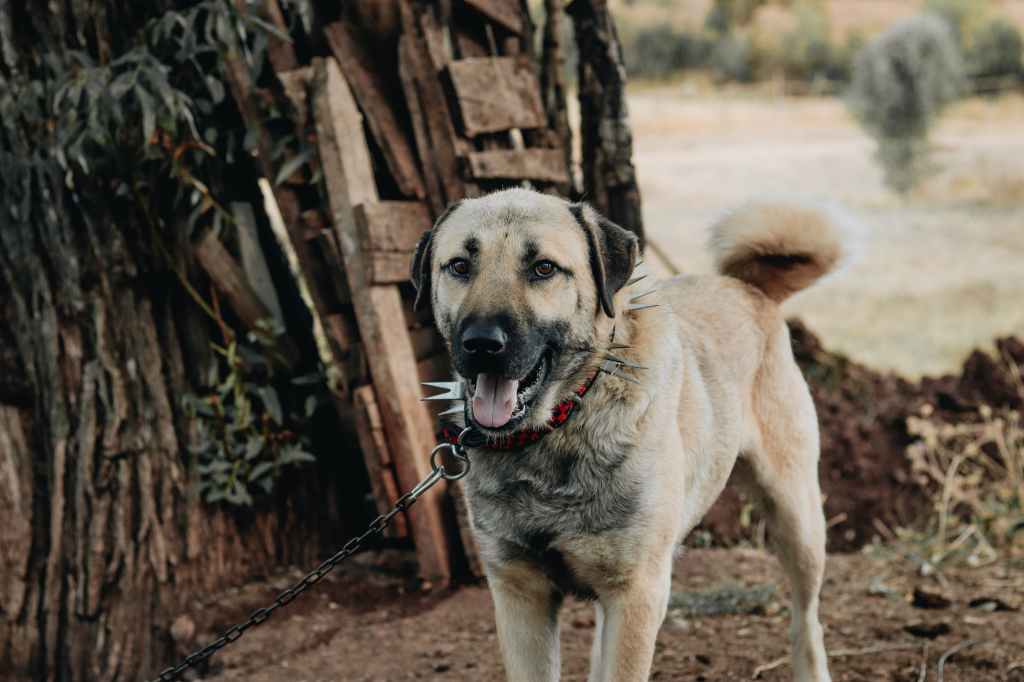
So, I’m just going to come out and say it: unless you’ve got a freakishly calm and non-confrontational specimen from the softer end of things, you almost certainly don’t need (and can’t manage) a livestock guardian in the UK. Now, I’ve had two indoorsy, mellow livestock guardians myself, from breeds who are often on the easier-going end of things (a Pyrenean and a Mastín) and they have been pure gold. Indeed, as strays, it’s highly likely that their suitability for my home was directly proportional to their unsuitability as flock protectors. But, I would never even dream of importing a Central Asian or a Caucasian to share my home with me on the outskirts of Birmingham, England! People need to stop with the Ovcharka obsession – 99% of people stand no chance of meeting their needs and managing their instincts. They’re closer to bears than dogs in many ways, and not just appearance. With that said and done, I’m drawing a line under livestock guardians; I won’t be mentioning them again – that can be a focus for another post.
So what DO most people need?
Well, to answer that bluntly: most people don’t NEED a guard dog at all.
For the purposes of keeping their homes and families safe in places like the UK, all most of us need is a dog who will bark at – rather than befriending – trespassers (sorry, Golden Retrievers – that’s you out of the running), and be large enough or ugly enough to scare intruders away if you’re not around to respond to the barking. To that end, if that’s your situation, you’d be better off with the African “lion hunter”, the Rhodesian Ridgeback, than you would with a more traditional guardian like the Presa Canario, for example. Ridgebacks aren’t “protective” by most people’s standards, but they look the part, and they are famed as vigilant and vocal watch dogs the world over. Now, the Ridgeback is just one, off-the-dome example; there are lots of dogs who are wary enough of strangers to bark, and large enough to look like more effort than they’re worth to overcome, who won’t also pose the threat of owner liability by attacking a visitor to your home.
I am sick to death of hearing about court cases involving posties and couriers who have been bitten by Dogos and Dobies who were complacently left to their own devices by their subsequently Surprised-Pikachu owners. With great power comes great responsibility – so if you are going to choose a dog that will act to protect its home, as per its centuries of breeding, you need to be managing it appropriately.
Now, if we don’t want to take the risk of owning a dog that may maul an intruder, then we’re secure in the realm of watch dogs. But what breeds fit the bill?
Watch Dogs
Well, I often hear terriers mentioned in this discussion. Now, I have a bit of a soft spot for terriers, and they ARE famed for their vigilance and unrelenting barks in the face of the unfamiliar, making them elite watchdogs. The same can be said for the feisty Chihuahuas and Dachshunds – and an ancestral Pug once famously foiled a royal assassination attempt in the 16th Century, gaining this breed the reputation as watchdog ever since. BUT, and it’s a big but, I believe that watchdogs should be “dual-purpose” unless you work from home. If you’re out of the home and your terrier breed is left to defend its property, all you need is for some wrongdoer to call the bark’s bluff and proceed, discovering the terrier to be small and relatively harmless, and suddenly all defences are overcome. That even applies to the King of Terriers, the Airedale, whose larger size (at 20-odd kilos) doesn’t make it look any less like the adorable Ruff the Dog from Old Bear and Friends. That’s why you want a larger dog, whose vocal nature can be backed up with some intimidation factor if you’re not there to follow up on the alert barking – like the 30-kilo Aussie Shepherd or German Shepherd, with the latter also coming with a fair bit more clout in terms of guardianship.
Now, if your situation calls for a bit more business than talk, you may be graduating beyond watchdog to actual guardian. But that doesn’t have to mean you face liabilities. Indeed, there are plenty of natural guardians who are highly reserved and will only act when absolutely necessary – and often not even with biting.

Natural Home Guardians
Going one step beyond the dual-purpose watchdog is the “tri-purpose” dog: with guardian potential. This is where I sit, personally, in terms of my needs and my preferences, and accordingly this category is home to my favourite subset of the species: the mastiff-type dogs or so-called “molosser” group (though I feel like the latter term is a bastardisation of history). These beautiful dogs span a wide range of intensities, with THE Mastiff (the English or Old English) sitting at the mellowest end of things and the Fila Brasileiro (banned in the UK) standing at the far end, in the realm of… bloody terrifying. Most families can handle the temperament of the Mastiff, and the Great Dane, as well as perhaps the Dogue de Bordeaux, and usually the Bullmastiff. Somewhat more spicy are the Italian mastiffs, with the Cane Corso being faster and more compact than the Neapolitan, but just as fiery, if not more. All of these spectacular dogs are protective, meaning that they will follow the classic mastiff sequence of guardianship: lie on sentry duty in your home; bark to alert you and ward off the stranger; use their size and strength to get between them and you or your property; and – if pushed – apprehend the assailant using force. There are examples from this category who are much faster to act, jumping straight to the final stage of using force (and with more force than most), who I wouldn’t recommend to the vast majority of owners. I’m talking about the likes of the Boerboel, the Presa Canario, the Dogo, and the Tosa. There are less intense lines of all dogs, of course, but this end of the spectrum (peaking with the Fila) I would typically approach with extreme caution and not recommend to all but the most experienced owners, with the most severe of protection needs.

Utility Protection Dogs
Now, the next category of dogs to explore isn’t necessarily a move “up” the scale in terms of guarding intensity. Indeed, most of these dogs are actually fairly low on natural guarding instinct. But it’s certainly a move up in terms of owner obligation, as they are the opposite of the independent breeds we just mentioned in the mastiff category; they are utility dogs, who need perpetual guidance and engagement. This is a group of breeds for serious owners looking to take their dogs into sporting roles in terms of protection. You’ve got the bulky, pig-headed, beauty that is the Rottweiler (who only belongs in this category instead of the mastiff one due to its working intelligence); then you’ve got Rottie-“Lite”, in terms of size and speed, with the incredible Dobermann; then you’re looking at the Shepherds – both German and Belgian – who have varying levels of off-the-wall working drive. There are others, plenty of them, but these are the big names in the category. These are dogs who simply cannot be left to their own devices; they need to work and be worked – and should ideally be in a home where they can be put into a vocation or into a sport, like IGP or any of the ring sports. There are (as always) exceptions, like those coming from more temperate and show-focused lines, but it’s a risk bringing a breed like this into your home if you aren’t at least PREPARED TO give up your time to these extracurricular pursuits to meet your dog’s needs. As a general rule of thumb, opt for the less energetic, heavier-set option if you haven’t had these dogs before: the Rottie before the Dobie; and the German Shepherd before the Malinois.
So, that covers the main categories of dogs that we would consider when planning on bringing a guardian breed into our lives and homes. There are plenty of others, but this isn’t an encyclopaedia, so I just want to outline the better-known examples for today.
In any case, you should now have a good idea about the kinds of dogs to consider, meaning you can start to narrow down on your own. If you want a huge but gentle watchdog who’s great with kids and loves the water, you’ll be thinking about a Newfie. If you’re looking for a jack-of-all-trades, versatile guardian with low shedding, maybe a Giant Schnauzer is for you. Once you’ve considered your lifestyle and how it meshes with the kind of guardian you want, you can get into that nitty gritty with individual characteristics like coat type and child-friendliness to refine the breed selection, and I can’t advise on the minutiae for every individual – that’s on you to explore. When you do get to that point, I would urge you to talk to actual owners and breeders, as well as behaviourists who have worked with lots of guardian breeds, so you’re not going to come up against any surprises. Spend more time meeting dogs and their owners than you do on Wikipedia. Then, it’ll be a case of researching breeders and thinking about puppy selection – but that’s for another post.
For now, in this post, let’s just finally address the little adjustments we need to make in our lives if we intend to take on a guard dog. Any guard dog.
Actually Living with a Guardian
First, and most crucially, it’s socialisation. Now, before you click off, remember that socialisation is not just for puppies and it’s not what most people think. Ongoing habituation and any required systematic desensitisation or counterconditioning is a lifelong pursuit for you as a guardian owner – so if you have an adult dog or plan to rescue one, this is still for you.
Most people misunderstand socialisation and just presume it’s a case of exposing your dog to as many different people and other dogs as possible in a few weeks and hoping that exposure equals acceptance. Unfortunately, it’s a much more delicate and deliberate procedure than that. Your dog should gain experience of people and dogs, yes, but it’s not about chucking them into a group of dogs or handing them around a group of humans like a pass-the-parcel game. These potential stressors should be introduced methodically, with the goal of your dog becoming neutral around them – neither fearful nor obsessed. As a result, you need to be an advocate for your dog, giving it the opportunity to retreat from interactions and reward it for engaging with you around this distracting and often disturbing new world. On top of that, socialisation is not just about people and dogs, but sounds, temperatures, smells, tastes – and even surfaces (indeed, a great little drill is to make an obstacle course for your dog to complete, with novel challenges and stimuli added over time). With guardian breeds, neutrality around unfamiliar things is more important than with any other type of dog – so be ready to step in and remove your pup if it’s not having a good time in an interaction, and reward it for re-engaging with you.
Again, socialisation deserves its own post, which may well be coming soon, but in the meantime, there’s some things to be thinking about.
Where the Action Happens
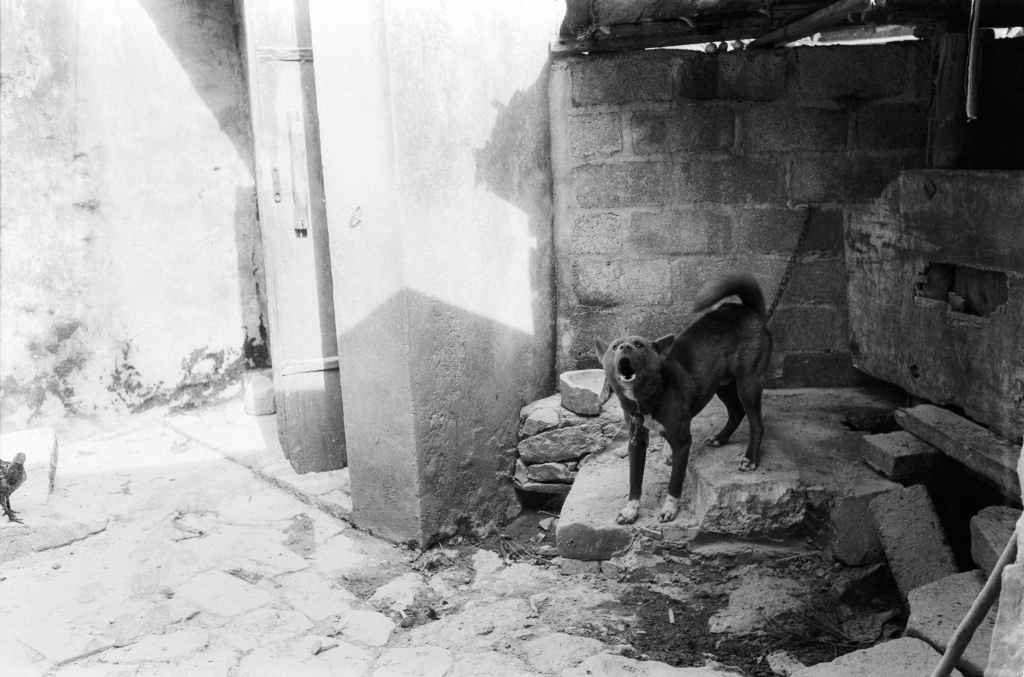
The other key area that bears considering in advance with these sorts of dogs, because it’s so important, is what I call the Mellow Visitation Protocol (or MVP). Do you know the number one location for issues resulting from excessive guarding behaviours? Or can you guess? It’s the front door. Now, dogs don’t know what doors are; they don’t consider the carpenter’s craftsmanship and paintwork or the lion’s head knocker… but what they do come to understand is that this is a threshold: the liminal space between the neutral realm of the outside world and their own territory that they have been bred to protect at all costs. As a result, a drill that needs coaching and rehearsing, from pretty much day one, is how to cope with visitors. Because 99.9% of the time or more, visitors are not threats.
An appropriate eight-step door-knock interaction when you’re home should look like this:
- door knocks/doorbell rings;
- dog “alert”-barks;
- dog is silenced by owner;
- owner goes to door, followed by dog;
- dog is given place and/or wait command;
- owner opens door, greets visitor;
- visitor either leaves or is invited in, whereupon dog can greet visitor politely;
- finally, dog is released from cue.
If it doesn’t look like this with your guardian, then work needs to be done to prevent visitors from becoming a potentially bloody problem.
This is a layered one, and so several things need teaching in isolation before building: the No-bark command; the Place, Wait and Break commands; and acclimation to visitors coming and going. This is best taught from puppyhood, before strong guarding instincts even kick in, if you get your guardian as a puppy, but is absolutely teachable to an adult guardian too. Teach each part separately, first. You can drill the Place, Wait, Break trinity as often as you like, and positively condition doorway thoroughfare whenever you get the chance. Over time, you can build it to a sequence that you rehearse, and one day you’ll be lucky enough to have your guardian bypassing your command and going straight to Place upon your approach to the door. That’s the good stuff.
Beyond these basic but fundamental interventions, you just need to prepare for your guardian’s arrival in your home by buying appropriate management equipment, suited to the size and power of the dog you have chosen for the job. Then, if you’ve chosen the right breed and done the legwork to prepare, you can look forward to the best ten years of your life, and probably a lifelong obsession with these spectacular animals, like me.
Good luck!
 That Breed Guy